

Honoring Robert Burns: Scotland’s National Poet, Proud Freemason, and the Immortal Bard
Explore the life of Robert Burns — poet, Freemason, and champion of equality. From his initiation in Tarbolton to his lasting legacy in Australia, including Sydney’s Domain statue, discover why Brother Burns remains an inspiration for Freemasons worldwide.
Who Was Robert Burns? – From Ploughman to National Bard
Robert Burns (1759–1796), known as Rabbie or the Bard of Ayrshire, was born on January 25, 1759, in a modest thatched cottage in Alloway, Ayrshire, Scotland. The eldest of seven children in a struggling farming family, Burns received limited formal education but was steeped in Scottish folk traditions, the Bible, and literature through his father’s encouragement.
By his late teens, he was composing poetry and songs in the Scots dialect, capturing love, nature, social injustice, and humor. His 1786 collection Poems, Chiefly in the Scottish Dialect (Kilmarnock Edition) brought overnight fame. Iconic works include “To a Mouse,” “Tam o’ Shanter,” “A Red, Red Rose,” and preserved songs like “Auld Lang Syne.” Despite literary success, Burns faced poverty, worked as an excise officer, fathered twelve children, and died at 37 from rheumatic heart disease.
For the full text of his poems, visit Project Gutenberg: Poems and Songs of Robert Burns.


Robert Burns's Masonic History: Initiation, Leadership, and Legacy
Burns joined Freemasonry at age 22, initiated as an Entered Apprentice on July 4, 1781, in Lodge St David No. 174, Tarbolton, paying 12s 6d. He advanced swiftly: passed Fellowcraft and raised Master Mason on October 1, 1781.
In 1782, he helped form Lodge St James No. 135, serving as Depute Master (1784–1788). He later rejoined Lodge St David and affiliated with others, including Lodge Canongate Kilwinning No. 2 in Edinburgh, where he was inaugurated Poet Laureate on February 1, 1787 — a highlight of his Masonic career.
Burns composed Masonic poems like “Farewell to the Brethren of St. James’s Lodge” and visited lodges widely. Freemasonry offered him equality, camaraderie, and intellectual freedom in a class-divided society.
Learn more from the Grand Lodge of Scotland: Robert Burns and Freemasonry.
- 1781: Initiated (July 4), Passed & Raised (October 1) – Lodge St David No. 174.
- 1784–1788: Depute Master, Lodge St James No. 135.
- 1787: Inaugurated Poet Laureate, Lodge Canongate Kilwinning No. 2.
- 1796: Masonic funeral with mile-long procession.

The Australian Connection: Burns Down Under
Though Burns never visited Australia, Scottish immigrants brought his works and Masonic ideals during 19th-century migration. Australia has more Burns statues than any non-Scottish country — eight erected 1883–1935.
In Sydney, the Domain statue (unveiled 1905 by Frederick Pomeroy) stands proudly, funded by Scottish societies and Freemasons. It’s located near Speakers' Corner, symbolizing Burns’s advocacy for free speech and equality.
Other notable statues include Adelaide’s 1894 marble figure (the first in Australia, in the city center); Ballarat’s 1887 memorial in Sturt Street; Melbourne’s 1904 bronze in Treasury Gardens; and Canberra’s 1935 statue on Canberra Avenue, the second-oldest public sculpture in the capital. Camperdown, Victoria, hosts a unique statue with a remarkable story: crafted in Scotland from an 1786 portrait, it journeyed to Australia and now anchors local Burns festivals.
Burns Clubs thrive across Australia, organizing annual Burns Suppers with poetry, haggis, and toasts. For Freemasons in Australia, these events blend Scottish heritage with Masonic brotherhood, often hosted in lodges. The statues and clubs keep Burns’s spirit alive, fostering community and cultural pride.
Explore more at Monument Australia: Robert Burns Statues or Wikipedia: List of Robert Burns Memorials.
Why Robert Burns Is Important to Freemasons
Called the “Scottish Freemason par excellence,” Burns embodied brotherly love, relief, and truth. His song “A Man’s a Man for A’ That” is practically a Masonic anthem:

Burns’s poetry often reflected Masonic values of equality, charity, and integrity. He gave generously to those less fortunate, wrote with unflinching honesty, and treated everyone — regardless of station — with respect and warmth.
Delve deeper with Scottish Rite NMJ: Was Robert Burns a Freemason? or Alexandria Burns Club: Robert Burns as a Freemason.
Fun Facts about Robert Burns
Before diving into traditions, here are some lesser-known tidbits about the Bard:
- Ladies’ man? Burns was famous for his romantic exploits, fathering twelve children by four women. His love poems, however, often celebrated true affection.
- Almost emigrated: In 1786, facing ruin, Burns booked passage to Jamaica — but his poetry’s success kept him in Scotland.
- Tax collector by day: As an excise officer, he gauged whisky barrels while composing verses, with ample “inspection” opportunities!
- Masonic funeral: His 1796 burial drew a mile-long procession of brethren; his wife gave birth that day to their youngest son.
- Worldwide influence: Bob Dylan cited “A Red, Red Rose” as his greatest lyrical inspiration — not bad for a farm boy!
For more, check History Hit: 10 Facts About Robert Burns.
The Haggis Tradition: From Ancient Thrift to Philosophical Feast
Haggis has deep historical roots in Scotland, with origins likely dating back centuries — possibly to pre-historic times or brought by Romans or Vikings. The first known written recipe appears in a 1390 cookbook for King Richard II, called “Afronchemolye,” and the name “haggis” was recorded in England around 1430, though it's now synonymous with Scottish tradition. Born of necessity in rural communities, it uses sheep’s offal (heart, liver, lungs) mixed with oats, onions, spices, and suet, encased in a stomach — a thrifty way to avoid waste and create a hearty, portable meal for shepherds and hunters.
Robert Burns transformed this peasant dish into a cultural icon with his 1786 poem “Address to a Haggis,” humorously elevating it as the “great chieftain o’ the puddin-race.” The poem satirically contrasts haggis’s honest simplicity with fancy foreign cuisines (like French “ragout”), celebrating Scottish pride, resilience, and wit in the face of hardship. Philosophically, it embodies Burns’s core themes: equality, humility, and the dignity of the common man. By addressing the haggis as a noble hero, Burns mocks pretension and honors the ordinary — a nod to Masonic values where merit, not status, defines worth.
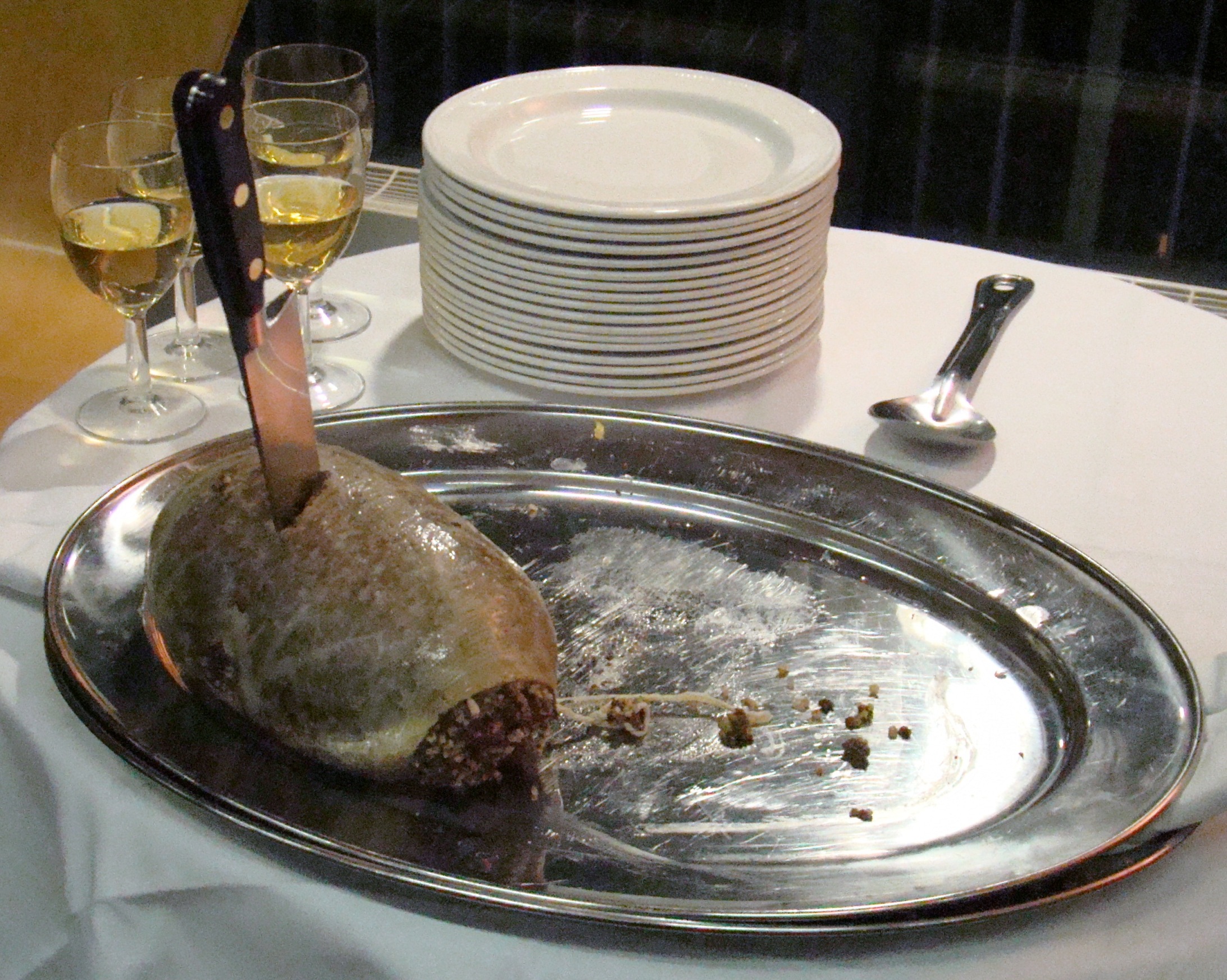
The Burns Night tradition began in 1801, when nine friends gathered on the anniversary of Burns’s death for a supper featuring haggis, poetry, and toasts. By 1803, it shifted to his birthday (January 25) and spread globally through Scottish clubs. At a traditional Burns Supper, the haggis is piped in dramatically, addressed with Burns’s poem, sliced with flair at the line “His knife see rustic Labour dight, An’ cut you up wi’ ready slicht,” toasted with Scotch whisky, and served with “neeps and tatties” (mashed turnips and potatoes). This ritual — equal parts theater and tribute — underscores Burns’s philosophy: finding joy and profundity in the everyday, uniting people in laughter and shared humanity.
Read the full poem at Project Gutenberg: Address to a Haggis.

A Lasting Inspiration
More than two centuries after his passing, Robert Burns remains a living presence in Freemasonry and beyond. His words are not mere poetry — they are a quiet guide to living with integrity, humility, and open-heartedness.
To see oursels as ithers see us!”
These lines from “To a Louse” remind us of the Masonic journey: the constant effort to know ourselves honestly, to temper pride, and to meet every brother — and every stranger — on the level of shared humanity.
Burns also gave us a vision of true equality that still resonates in lodge rooms today:
Shall brothers be for a’ that.”
In an age of division, these words carry a gentle yet powerful challenge: to build a world where worth is measured not by title or wealth, but by character, kindness, and the courage to live truthfully.
So whether we gather in a Sydney lodge, stand before the statue in The Domain, or simply read his lines by lamplight, let us carry forward the spirit of Brother Burns: to laugh together, to lift one another up, and to remember that every person — rich or poor, near or far — is worthy of respect and brotherhood.
To the immortal memory of Robert Burns — ploughman, poet, Freemason, and friend to all who value the light within.
Happy to meet, sorry to part, happy to meet again. 🥃
Why Freemasonry?
Curious about what Freemasonry is really about? Whether you're drawn to its values of brotherhood, charity, personal growth, or simply want to understand more, we're here to answer your questions honestly and openly.
No pressure, no obligation — just a friendly conversation with a Mason who can share what it means to us.